
March 14 is finally here, and I’ve just arrived home from my appointment with Dr. V at the fertility clinic.
It wasn’t my first time meeting him; I saw him twice last summer when I was gathering information the same way a pregnant woman gathers waist circumference.
So, here’s the plan:
On Day 1 of my next cycle (which should be March 23rd), I have to call the clinic and do two things: first, schedule a sonohysterogram for Day 6 (side note: WordPress wants to auto-correct sonohysterogram to stenographer.) Then, I advise that I’m doing a donor insemination with no drugs and I need to start cycle monitoring.
A sonohysterogram is used to check a woman’s Fallopian tubes. I had one done in the past – my tubes are tubular, thank you very much – but Doc wants to do another one before we start, as blowing open the tubes with the liquid used in the sono has been shown to slightly improve the odds of pregnancy.
Cycle monitoring allows the doctor to determine exactly when I’m ovulating, dictating the best time to inseminate. When my next period begins, so does my cycle monitoring. I’ll have to visit the clinic to give blood every morning for 4-5 days, beginning on Day 2 of my cycle. The blood work will show my hormone levels.
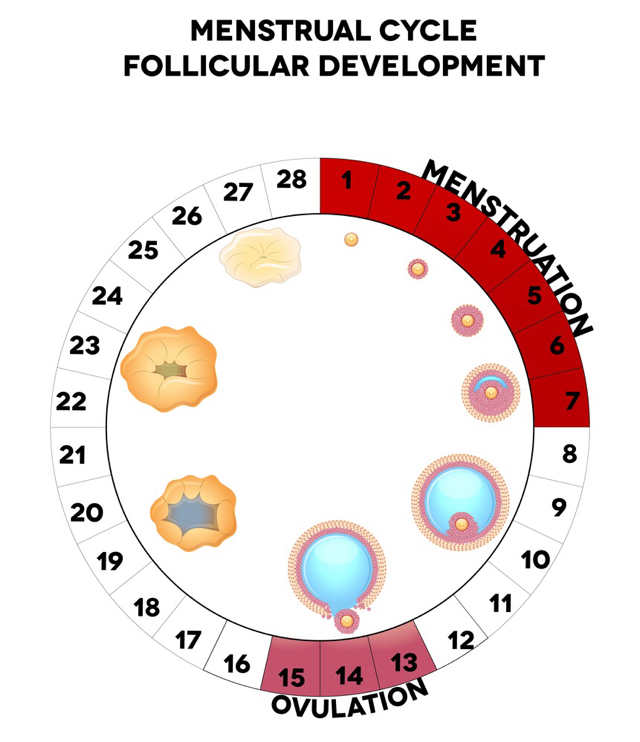
About those hormones… not just responsible for adolescent acne and horny teenagers. Of course, I know that hormones play a massive role in the reproductive system and conception, but I’ve recently learned further specific details. Allow me to offer the same education to you all!
“A woman’s reproductive system is under the influence of hormones regulated by the hypothalamus and its gonadotropin-releasing hormone (GnRH). This hormone causes the cells in the frontal part of the pituitary gland to produce two types of hormones. The first is the FSH or the follicle-stimulating hormone, and the other is LH, or the luteinizing hormone. These hormones travel all the way to the ovaries where they influence estrogen and progesterone level changes and aid maturing of the follicles inside the ovaries. Some of the matured follicles will eventually become eggs and travel down the fallopian tubes to be fertilized there and then travel into the uterus. This complex hormone interaction is called hypothalamic-pituitary-ovarian axis.
Once the estrogen levels come to its peak, luteinizing hormone levels also rise due to positive feedback. This process kicks off the ovulation and causes the egg to be released from the ovary.”
Clearly, today’s blog is brought to you by the letter “H” (and the Flo app).
Each morning’s blood test will show how my levels are increasing, pinning down when my egg will fly the coop, nailing down insemination day, which looks like it could be as soon as the first of April. No fooling.
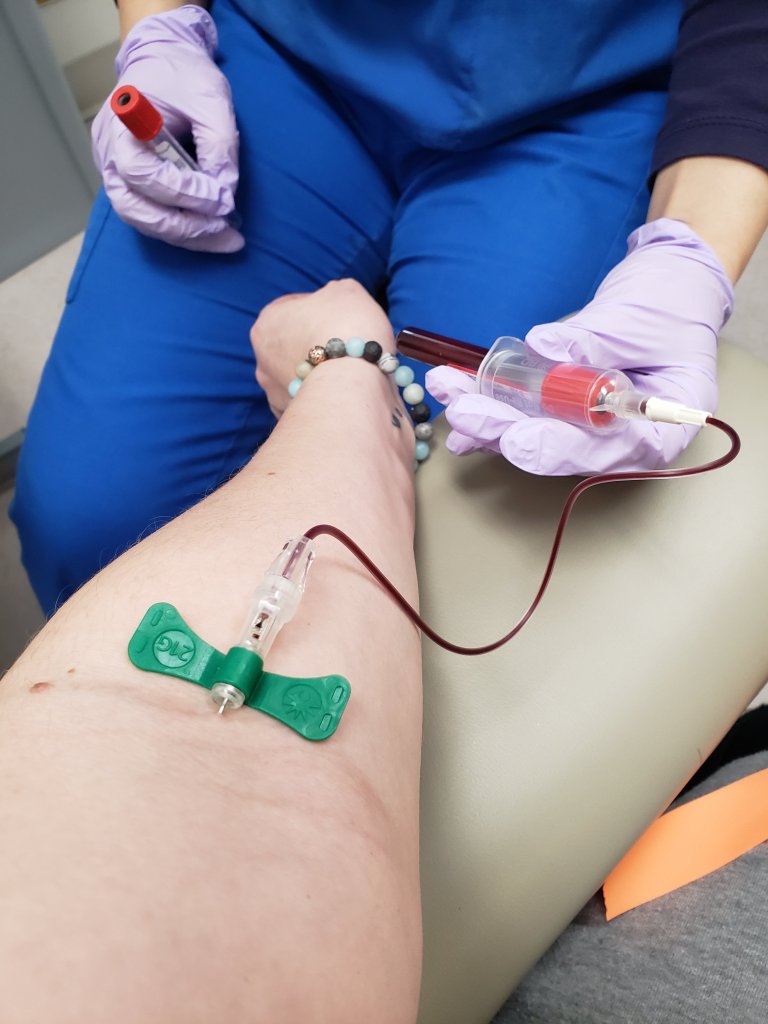
I was in and out of my appointment in less than 10 minutes. In fact, I waited longer to be seen for today’s blood work, which consisted of about 14 vials! This is to check my current hormone levels, as well as for diseases like Hepatitis, HIV, etc.
I told my Doc that I’ve already got my donor sperm on ice, and that I have two friends who are currently pregnant, so I want to “catch up”. His reply: “Let’s catch up, then, and get you pregnant.”
Yes, Doc, let’s.
 Conceiving Motherhood
Omg I HATED the sono…I’m a wimp and it bloody well hurt. And then I giggled when she said my tubes were gorgeous. Gorgeous – never a word used to describe me, but hey if my tubes are! Lol. Best of luck love, I’m so happy you are doing this!
LikeLike
Really? I didn’t find it painful at all.
LikeLike
What a Christmas present your going to have this year xo
LikeLiked by 1 person